10 min read · Guides
Start with the wrapper, filling, and cooking method
The different types of dumplings are easier to understand when you stop treating “dumpling” as one exact recipe. In everyday English, the word covers many foods: filled parcels, unfilled dough pieces, steamed buns in some contexts, and even sweet preparations. Culinary boundaries depend on language and tradition.
For ordering at a Chinese restaurant, three questions usually solve most confusion. What surrounds the filling? What is inside? How is it cooked? A thin wheat wrapper around seasoned pork, boiled in water, will feel different from a fluffy yeast-raised bun steamed around the same general filling.
TheUglyDumplingMenu.com is an independent informational website, not affiliated with Ugly Dumpling. Our dumpling menu guide helps connect these general food terms to restaurant ordering, but individual menus should always be checked. Names, translations, fillings, and preparation methods can vary.
A quick comparison of familiar dumplings
Use this table as an orientation, not a rigid rulebook. Every category contains regional and household variations, and restaurants sometimes use English names differently.
| Type | Common identifying feature | Frequent cooking method |
|---|---|---|
| Jiaozi | Filled wrapper, often crescent-shaped | Boiled, steamed, or pan-fried |
| Guotie or potstickers | Pan-fried base with a tender upper wrapper | Pan-fried and steam-cooked |
| Xiao long bao | Delicate wrapper containing filling and broth | Steamed |
| Wontons | Thin wrappers folded in varied shapes | Boiled or fried |
| Har gow | Translucent wrapper, commonly shrimp-filled | Steamed |
| Siu mai | Open top with visible filling | Steamed |
| Gyoza | Japanese dumplings, often finely filled | Frequently pan-fried and steamed |
| Mandu | Korean dumplings in many forms | Steamed, boiled, or fried |
| Momo | Himalayan-region filled dumplings | Often steamed |
| Baozi | Yeast-raised dough around a filling | Often steamed |
Think of the table as a map with overlapping regions. A cooking method does not identify a filling, and a familiar shape does not prove a dish has the same ingredients as another restaurant's version.
Jiaozi: a broad family of filled dumplings
Jiaozi are associated with Chinese cooking and commonly have a wrapper enclosing meat, vegetables, seafood, or a combination. Crescent shapes and pleated edges are familiar, but shape alone is not the definition. Recipes and folding styles vary considerably.
You may encounter boiled jiaozi, steamed jiaozi, or pan-fried versions. Those techniques affect the wrapper: boiling produces a supple surface, steaming can leave a slightly firmer exterior, and pan-frying introduces a crisp base. None is automatically the “proper” version for every meal.
Common filling considerations
Pork with cabbage or chives is familiar in many contexts, but it is only a starting point. Beef, chicken, shrimp, mushrooms, and mixed vegetables also appear. The balance of filling moisture and wrapper strength is important regardless of the ingredient combination.
If making your own, finely chop ingredients rather than turning everything into paste unless a particular recipe calls for that texture. Our homemade dumpling guide explains how to keep vegetables from making a filling overly wet.
Ordering jiaozi thoughtfully
Ask whether the menu's “dumplings” are boiled, steamed, or pan-fried. If no cooking method is listed, do not assume. A photograph may show a preparation that differs from the currently available version or a serving suggestion used elsewhere.
Also ask about portion count. A small appetizer plate and a main-course platter may use similar names. Pairing a modest serving with noodles or rice can make more sense than guessing how many baskets will satisfy a group.
Potstickers and guotie: the crisp-bottomed branch
Potstickers generally describe filled dumplings cooked so that the base browns while the upper wrapper remains tender. A common home method combines shallow pan-frying with a measured addition of water and a covered steaming stage, followed by evaporation.
The crisp base is the key contrast. Potstickers are not the opposite of dumplings; they are one kind. Our potstickers versus dumplings guide explores this distinction and the practical effect on ordering.
What about the lacy skirt?
Some cooks add a starch-and-water mixture that sets into a thin, crisp lattice around the dumplings. This decorative skirt is an optional technique, not a requirement for a dumpling to qualify as a potsticker.
A fragile skirt is best enjoyed promptly. In a closed takeout container, trapped moisture can soften it. That does not necessarily indicate poor cooking; it reflects the difficulty of preserving a delicate crisp texture during transport.
Xiao long bao: broth inside the wrapper
Xiao long bao are commonly known in English as soup dumplings. Their defining attraction is broth contained inside the wrapper with the filling. In many recipes, chilled gelatin-rich stock is mixed into the filling and melts during steaming.
Not every dumpling served in soup is a soup dumpling in this sense. Wontons floating in broth have soup outside them; xiao long bao hold broth within. That difference matters both for ordering and for avoiding a hot surprise at the table.
How to eat them safely
Lift gently and support the dumpling with a spoon. Allow it to cool, make a small opening, and carefully release or sip some broth before eating the rest. The exact sequence can vary; avoiding burns and preventing the wrapper from tearing are the practical goals.
Read our dumpling etiquette guide for more detail. Do not squeeze a soup dumpling firmly with chopsticks, and do not put a steaming-hot whole dumpling straight into your mouth to imitate a video.
Are all soup dumplings the same size?
No. Related soup-filled preparations vary in size and regional naming. A menu may use an English translation broadly, so ask if you are expecting small individual pieces rather than a larger broth-filled bun or parcel.
The presence of broth also does not tell you the protein. Pork is common, but other fillings exist. Anyone avoiding pork, shellfish, or another ingredient should ask about the complete filling and stock, not just the headline flavor.
Wontons: delicate wrappers and flexible serving styles
Wontons use thin wrappers folded into several shapes, including pouch-like and folded forms. They can be served in broth, dressed with sauce, or fried. A single English menu category may therefore cover dishes with very different textures.
Boiled wontons often have soft wrapper edges that move in broth or sauce. Fried wontons emphasize crispness. Their filling might include pork, shrimp, vegetables, or other ingredients, but none should be assumed from shape alone.
Wontons versus dumplings in soup
A bowl of wonton soup is a way of serving a dumpling, rather than proof that “wonton” means every dumpling found in soup. Other dumpling types can also be served in broth in their own culinary traditions.
When comparing menu items, consider the entire bowl. Broth seasoning, greens, noodles, and portion size all affect whether the dish is a light starter or a filling meal. The full menu overview helps you think beyond one ingredient.
Har gow and siu mai in dim sum
Har gow are frequently recognized by a translucent wrapper and shrimp filling. The wrapper is typically starch-based, with a texture different from a standard wheat-flour jiaozi skin. Formulas vary, so appearance does not establish an allergen profile.
Siu mai, also spelled shumai or shaomai in different contexts, often have an open top that exposes the filling. Regional versions differ substantially, including in the use of pork, seafood, mushrooms, or sticky rice. A familiar name is not a complete ingredient list.
Dim sum describes more than dumplings
Dim sum encompasses a broad range of small dishes, which may include dumplings, buns, rolls, cakes, and sweets. It is not a synonym for one wrapper style or for every Chinese appetizer.
If you enjoy variety, a dim sum-style meal can show how steaming creates many textures. Compare a translucent wrapper, a soft open-topped parcel, and a fluffy bun rather than ordering three nearly identical fillings and expecting dramatically different experiences.
Gyoza and mandu: related ideas, distinct traditions
Japanese gyoza are often associated with finely chopped fillings and a pan-fried base, although boiled and other versions exist. Their relationship to Chinese dumpling traditions does not make the foods interchangeable in every detail.
Korean mandu likewise cover varied shapes, fillings, and preparations. Some are served in soup; others are steamed or pan-fried. Kimchi is a possible filling ingredient, but not every mandu contains it, and kimchi itself can include seafood ingredients.
Avoid oversimplified comparisons
Statements such as “gyoza are always smaller” or “mandu always contain tofu” are too absolute. These observations may describe examples you have eaten, not universal definitions. Menus and recipes are more useful than sweeping rules.
For a tasting meal, compare one preparation at a time. If you compare steamed mandu with pan-fried gyoza, differences arise from both the culinary style and the cooking method. Note both instead of attributing everything to the name.
Momos and other dumpling traditions
Momos are associated with Tibet, Nepal, and neighboring Himalayan communities, with many regional and diaspora variations. They may contain meat or vegetables and are often served with a distinctive sauce. Steaming is common, but other preparations also exist.
Beyond East and Himalayan Asia, foods translated as dumplings include pierogi, pelmeni, manti, and many more. This guide cannot reduce their histories to a single family tree. Similar construction does not erase the distinct techniques, ingredients, and cultural contexts involved.
Is every filled dough food a dumpling?
There is no universal English-language boundary that resolves every case. Ravioli, empanadas, and filled breads may be compared with dumplings in casual conversation, but speakers and culinary traditions classify them differently.
For everyday cooking and ordering, precise descriptions are more useful than winning a naming argument. “Thin wrapper, mushroom filling, boiled, served with vinegar” tells a diner much more than insisting that a food must or must not belong in one broad category.
Where bao buns fit
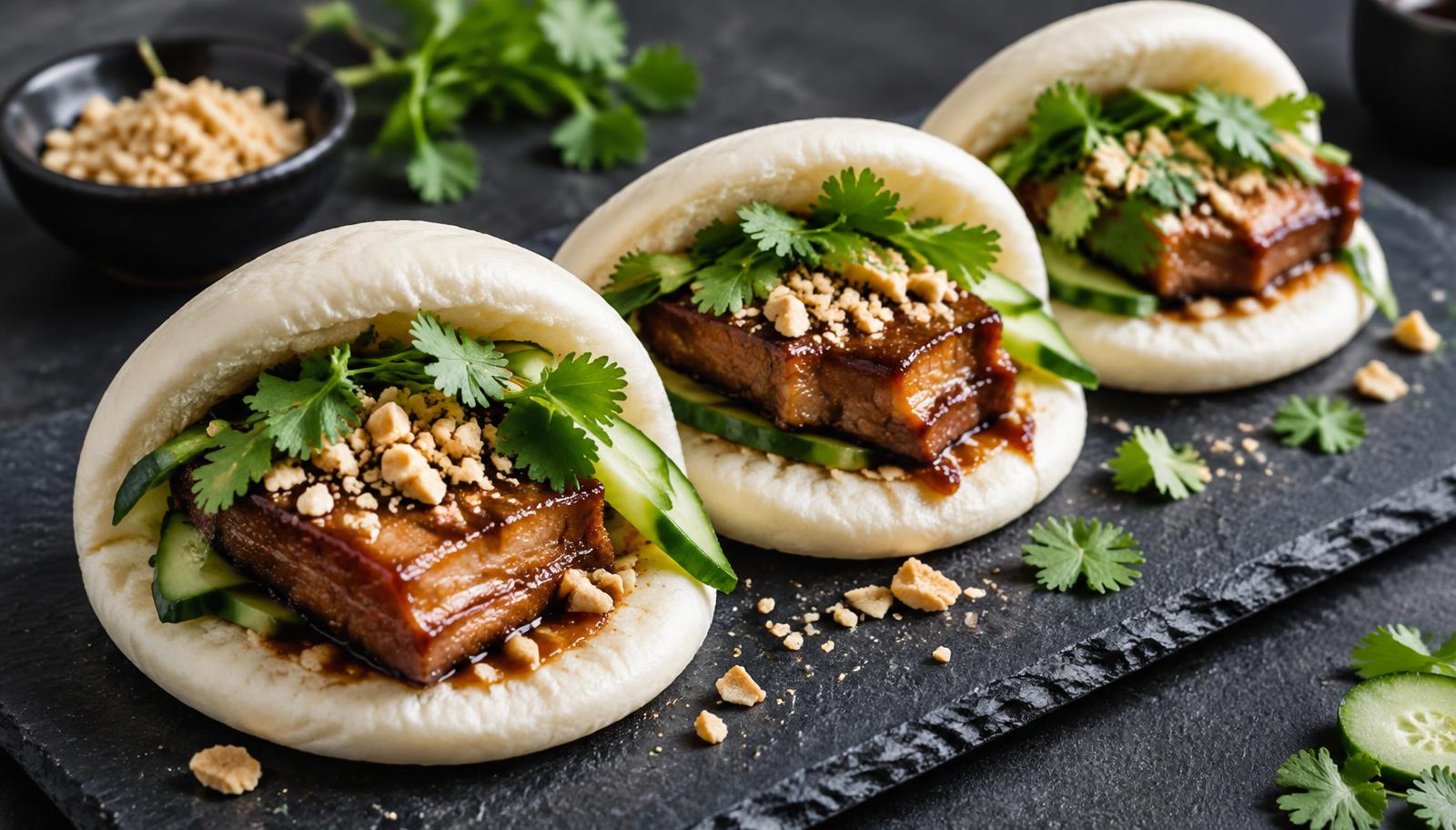
Baozi are filled buns made with raised dough, frequently steamed. They have a bread-like structure rather than the thin skin many English-speaking diners expect when hearing “dumpling.” Some classifications place buns near the dumpling family; others separate them.
Our bao buns guide explains filled buns and folded buns more fully. For restaurant planning, use the bao menu guide and check whether the item is enclosed, open, steamed, or otherwise prepared.
A bao bun can be more filling than its dimensions suggest because the dough contributes substantial volume. If sharing several courses, consider mixing one bun order with thinner-wrapper dumplings rather than assuming each piece has comparable heft.
Sauces, sides, and dietary questions
A balanced sauce should complement rather than hide the filling. Vinegar brings acidity; soy sauce adds salt and savory flavor; chili oil adds heat and aroma. The best ratio depends on the dumpling and on personal preference.
Use our dumpling dipping sauce guide for combinations, and our what to serve with dumplings guide for complete-meal ideas. A crisp vegetable side can provide welcome contrast to several soft steamed dishes.
For restrictions, consult the allergens and nutrition overview and ask the restaurant directly. Wheat, soy, sesame, shellfish, egg, and other allergens can appear in unexpected components. Vegetable filling alone does not establish that a dish is vegan.
If comparing restaurant costs, remember that prices are approximate and vary by location and ordering channel. Use our menu price guide for planning rather than treating any example as a guaranteed current quote.
Frequently Asked Questions
What is the main difference between dumpling types?
Wrapper composition, filling, shape, and cooking method are the most useful distinctions. Origin and serving style also matter. A name sometimes covers many variations, so check the menu description rather than relying on a single photograph.
Are potstickers a type of dumpling?
Yes. Potstickers are generally filled dumplings with a browned base and a tender upper wrapper. Not all dumplings are potstickers because many are boiled, steamed without frying, or prepared using other methods.
Are soup dumplings simply dumplings in soup?
Usually, “soup dumplings” on an English-language Chinese restaurant menu means broth is inside the wrapper. Dumplings served in a bowl of soup are a different arrangement. Ask the restaurant if the wording is ambiguous.
Are translucent dumpling wrappers gluten-free?
Not necessarily. Recipes can use different starches or include wheat-derived ingredients, and preparation areas may be shared. People avoiding gluten for medical reasons should seek specific ingredient and cross-contact information rather than judging transparency.
Are vegetable dumplings always vegetarian or vegan?
No. Broth, sauces, seasonings, wrappers, or cooking fats may contain animal ingredients. Verify the whole preparation. Our independent guides cannot certify a particular restaurant's dish or its kitchen procedures.
Which dumpling should a beginner try first?
Start with a filling you already enjoy and a clearly described cooking method. A pan-fried dumpling offers an approachable contrast of crisp and tender textures. Try soup dumplings next if you want broth, allowing them to cool before eating.
Planning your Ugly Dumpling order?