9 min read · Guides
A practical independent guide
Ugly Dumpling allergen guide searches deserve clear answers, but accuracy also requires distinguishing confirmed details from assumptions. This article gives you a practical framework for planning a meal, checking current information, and deciding which questions need a direct answer from the restaurant. It does not turn a broad brand description into a promise about every individual location.
TheUglyDumplingMenu.com is an independent informational website, not affiliated with, endorsed by, or operated by Ugly Dumpling. Our independent site information explains that role. We cannot reserve tables, change orders, certify ingredients, guarantee opening dates, or resolve payments made to another business.
Prices are approximate whenever discussed. Any numerical example is an illustration unless explicitly identified otherwise, not a verified local quote. Confirm the current menu, total charges, and relevant service details with the exact restaurant or ordering channel you plan to use.
This guide is not an allergen certification
An Ugly Dumpling allergen guide should help you ask better questions, not declare dishes safe without verified information. Ingredients, suppliers, preparation methods, and shared equipment can change. No independent menu summary can replace direct confirmation from the restaurant preparing your meal.
For a diagnosed food allergy, explain the exact allergen and ask whether the kitchen can accommodate it. If staff cannot verify ingredients or cross-contact controls, uncertainty remains. Removing a visible ingredient after cooking does not necessarily make food suitable for someone with an allergy.
Use our allergen and nutrition information to organize this part of your planning. Treat it as a starting point, then check any detail that could change your decision with the business responsible for providing the meal.
Know the major US allergens
The nine major food allergens recognized in the United States are milk, egg, fish, crustacean shellfish, tree nuts, peanuts, wheat, soybeans, and sesame. This list is not exhaustive: people can react to other foods. Specify your own allergen rather than asking only whether a dish contains common allergens.
Different allergens require different questions. Fish and crustacean shellfish are separate categories, and a statement about peanuts does not answer a question about tree nuts. If your clinician has given you particular avoidance instructions, follow those rather than trying to infer safety from broad menu labels.
Use our menu planning overview to organize this part of your planning. Treat it as a starting point, then check any detail that could change your decision with the business responsible for providing the meal.
Wrappers and fillings both matter
A dumplings name usually emphasizes its filling, but the wrapper and seasonings matter too. Wheat can be relevant to wrappers, while egg, soy, sesame, or other ingredients may appear elsewhere in the preparation. Do not assume a chicken dumpling contains only chicken and dough.
Ask staff to check the current recipe and any packaged ingredient labels available to them. A translucent wrapper is not proof of gluten-free preparation. Gluten-related needs also require their own conversation because wheat allergy and celiac disease are distinct conditions with different considerations.
Use our dumpling menu guide to organize this part of your planning. Treat it as a starting point, then check any detail that could change your decision with the business responsible for providing the meal.
Sauces can change the answer
A plain-looking dish can contain a sauce, marinade, stock, oil, or garnish that introduces an allergen. Ask about every component, including dipping sauces served separately. Removing a topping may not address ingredients already incorporated into a filling or cooking sauce.
The published menu PDF specifically flags peanuts in noodles with sesame sauce and green tea noodles with sesame sauce. It also states that cream cheese rangoon contains imitation crab. These notes are useful warnings, but they are not a complete restaurant allergen matrix or proof that unflagged dishes lack allergens.
Use our noodles and rice guide to organize this part of your planning. Treat it as a starting point, then check any detail that could change your decision with the business responsible for providing the meal.
Imitation crab needs ingredient verification
Imitation crab is not a reliable shortcut for deciding whether a dish fits a fish or shellfish allergy. Formulations can vary and may include fish and other ingredients. Ask the restaurant to verify the actual product and all relevant allergens rather than relying on the word imitation.
Likewise, a pork dish may include shrimp, and a vegetable dish may use an animal-based seasoning. Read full names and descriptions, then ask targeted questions. A short menu title is designed for ordering convenience, not as a complete ingredient declaration.
Use our gluten-free planning guide to organize this part of your planning. Treat it as a starting point, then check any detail that could change your decision with the business responsible for providing the meal.
Vegan does not mean free of allergens
A vegan item can contain wheat, soy, sesame, peanuts, tree nuts, or other allergens. It can also be prepared with shared equipment. Vegan labeling addresses animal-derived ingredients, not every medical dietary requirement, and it does not by itself establish cross-contact controls.
Ask separate questions for separate needs. Someone avoiding dairy for an allergy needs more than a general preference request, and someone choosing a plant-based meal may still need to check broth and sauces. Avoid combining several different dietary concerns into the single phrase special diet.
Use our vegetarian and vegan guide to organize this part of your planning. Treat it as a starting point, then check any detail that could change your decision with the business responsible for providing the meal.
Drinks require an independent ingredient check
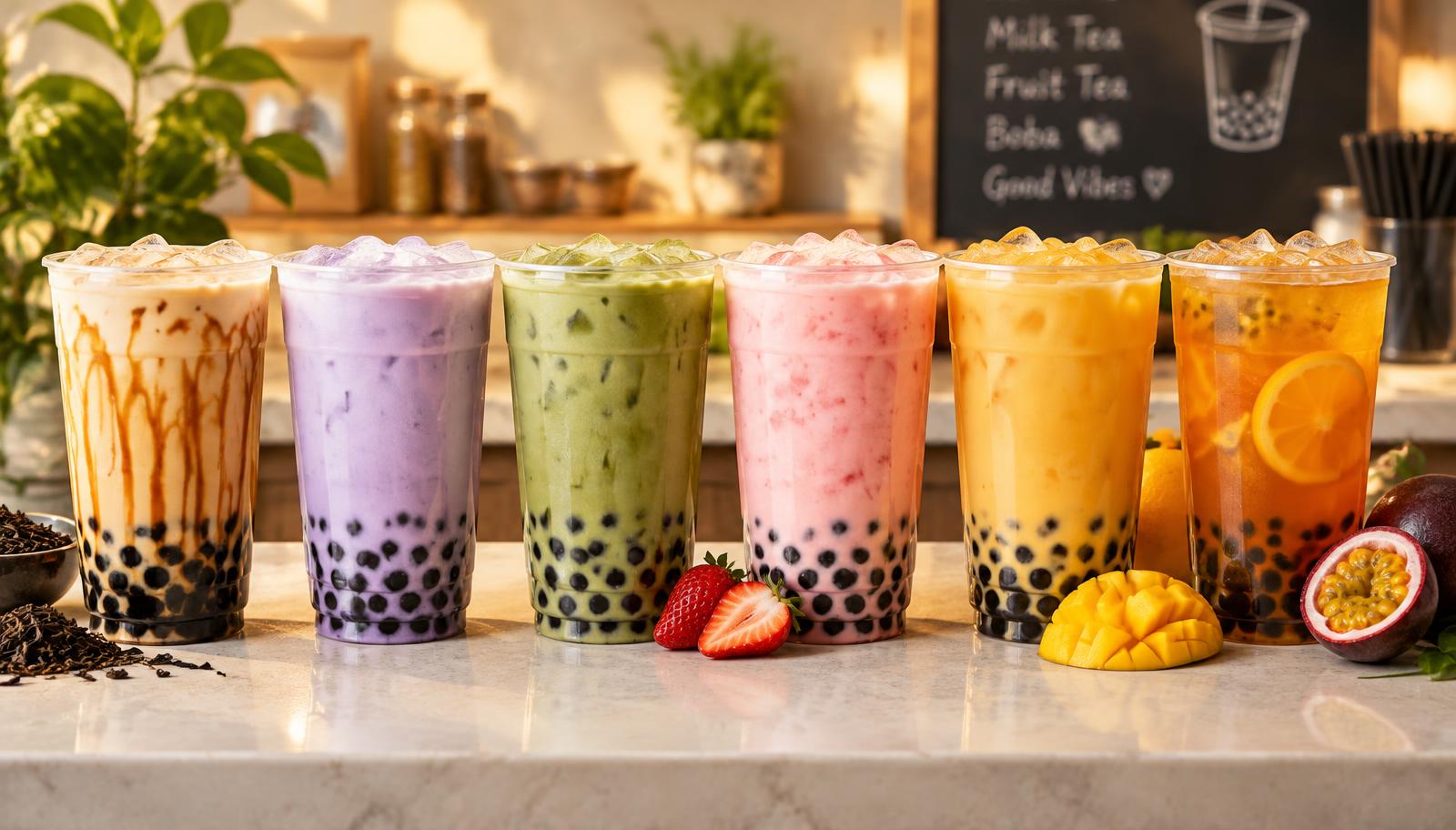
Milk tea, cream-topped drinks, flavored powders, yogurt-style beverages, and toppings can introduce allergens beyond those in the food order. A fruity name does not establish that a drink is dairy-free, and a nondairy description may still need clarification about the actual ingredient formulation.
Ask about drink preparation equipment as well as ingredients. Shared shakers, blenders, scoops, and work areas can matter. Choosing a sealed beverage may be one option to discuss, but inspect its label and make your decision according to your own medical guidance.
Use our boba drink ingredient guide to organize this part of your planning. Treat it as a starting point, then check any detail that could change your decision with the business responsible for providing the meal.
Confirm cross-contact procedures before paying
Ask whether the kitchen uses shared steamers, fryers, boiling water, utensils, preparation surfaces, and sauce containers where relevant. The goal is a clear description of what staff can and cannot control, not a promise produced by asking the same question repeatedly.
For online orders, a free-text note is not a substitute for an accommodation conversation. Confirm that the restaurant has accepted your request before completing the order if it is medically necessary. If a reaction occurs, follow your emergency plan and seek urgent medical help when indicated.
Use our independent website contact information to organize this part of your planning. Treat it as a starting point, then check any detail that could change your decision with the business responsible for providing the meal.
Published menu context
Dish names and explicit menu notes referenced here come from the published dine-in menu PDF. The document states that prices and menu offerings are subject to change. It is a menu source, not a complete allergen certification, heat-scale chart, or guarantee of availability at an individual branch. 4
A final check before you commit
Make one short checklist instead of keeping several conflicting browser tabs open. Write down the exact location, the ordering channel, the food you want, the questions that remain unanswered, and the time you expect to eat. If a crucial detail is unknown, resolve it before paying or traveling rather than hoping the answer will be favorable.
For a group, appoint one person to confirm logistics while each diner remains responsible for communicating their own dietary needs. Share the final plan in one message so everyone has the same address, arrival time, and expectations. Clear communication prevents many avoidable mistakes without requiring an elaborate itinerary.
After the meal, distinguish an information correction from an operational complaint. An independent site can update its own coverage when given a reliable correction. Only the restaurant or ordering provider can handle missing food, refunds, reservation changes, or a charge made through its systems. Keeping those roles separate helps your question reach someone able to answer it.
Make an allergy inquiry specific and actionable
A useful allergy conversation starts with the exact ingredient and the seriousness of the reaction. Tell staff clearly which allergen must be avoided, whether even trace cross-contact is a concern, and which dish you are considering. “Does this contain nuts?” can be less informative than naming the specific nut and asking whether the kitchen can verify both the recipe and preparation process. Do not rely on appearance, a dish’s name, or another diner’s past experience as proof that a current serving is safe.
Ask about components separately: wrapper, filling, sauce, garnish, cooking oil, and shared equipment may each introduce different risks. A sauce served on the side can still be handled with utensils that touched other foods. Similarly, removing a visible topping does not remove an allergen that was mixed into a filling or used during preparation. If staff cannot verify ingredients or explain cross-contact controls, the safest decision for a serious allergy may be to choose another meal or not order from that kitchen.
Be precise about dietary terms. “Gluten-free,” “dairy-free,” or “vegan” describes a particular dietary attribute and is not a guarantee against every allergen or shared-surface exposure. Recipes, suppliers, and kitchen practices can change, so confirm each time you order. If you carry prescribed emergency medication, follow your clinician’s guidance and keep it accessible; do not treat a restaurant’s answer as medical advice.
For a pre-order check, review the current menu and then contact the restaurant with your specific questions. The gluten-free options guide may offer useful context, but it cannot certify a dish as safe for an individual allergy. Ask whether the information is current, request a clear answer about cross-contact, and be willing to skip an item when details remain uncertain. Clear communication helps staff respond accurately and helps you make an informed choice.
Frequently Asked Questions
Is this an official Ugly Dumpling website?
No. TheUglyDumplingMenu.com is independent and unaffiliated with Ugly Dumpling. It provides informational guides, not restaurant management or customer service. Contact the exact restaurant for reservations and kitchen questions, and contact the ordering provider for issues involving an order or payment processed through that provider.
Can I assume every location follows the same details?
No. Current menus, opening status, operating hours, preparation arrangements, promotions, and available ordering channels can differ. Select the exact address first. Then verify the details relevant to your visit, especially if one item, accommodation, or service arrangement is essential to your decision.
Are the prices here guaranteed?
No. Prices are approximate, and any hypothetical amounts are budgeting illustrations rather than verified quotes. Check the current menu or final checkout screen for the exact location. Taxes, service charges, delivery fees, additions, and any optional tip can change the amount you pay.
What should I check immediately before ordering?
Confirm the restaurant address, current service availability, the items you want, and the full price. If timing matters, check preparation or seating expectations. If ingredients matter for medical reasons, speak directly with the restaurant and do not treat a general menu description or an unchecked checkout note as confirmation.
What if online sources disagree?
Compare the exact address and the type of claim each source makes. A directory may establish a listed location without confirming current hours, while an old promotion may establish only a past offer. Seek direct confirmation when the disagreement affects travel, spending, timing, or a dietary decision.
Can I request an update to this guide?
Yes. Send an informational correction through our contact page and include the specific detail and a reliable source if possible. That does not contact restaurant staff or change an existing order. For urgent restaurant matters, use the restaurant or ordering provider directly rather than waiting for an editorial update.
Planning your Ugly Dumpling order?